Burt Copeland
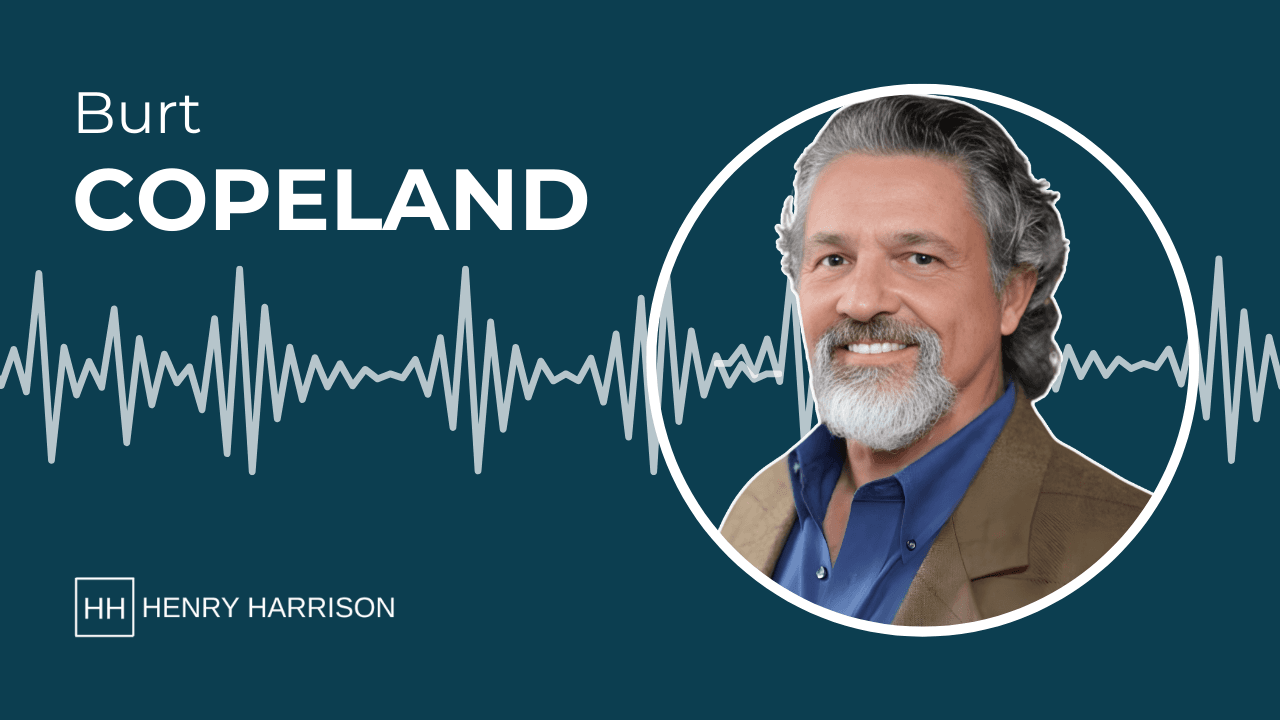
Burt Copeland - New Life CFO
Fractional CFO Services & Financial Leadership
Burt Copeland of New Life CFO on financial leadership and fractional CFO services.
Watch / Listen
About This Episode
In this episode, Henry Harrison welcomes Burt Copeland, founder of New Life CFO. Burt shares his journey from corporate finance to launching a fractional CFO practice that helps small and mid-sized businesses access top-tier financial leadership without the full-time executive cost.
The conversation explores how businesses can benefit from strategic financial guidance, the importance of cash flow management, and how fractional CFO services are transforming how companies approach their finances.
Key Insights
- Fractional CFO services provide enterprise-level financial expertise at a fraction of the cost
- Cash flow management is critical for business sustainability
- Strategic financial planning helps businesses scale effectively
- Many growing companies need CFO guidance but can't justify a full-time hire
Episode Transcript
This transcript has been edited for clarity and readability. Filler words and repetitions have been removed, and formatting has been adjusted for flow while preserving the original meaning and conversational tone.
Henry Harrison:
I’m very glad to have the CEO, owner, and founder of New Life CFO on the Henry Harrison Podcast—Entrepreneurs, Business, and Finance.
We’ve become friends, I’ve seen him speak, and we’ve even discussed how he might help my company. He’s a terrific guy.
Hello, Bert Copeland.
Bert Copeland:
Henry, thanks a ton for having me. It’s great to be here.
What New Life CFO Does
Henry Harrison:
You’ve built a strong company with a team of around 16 people. The name New Life CFO gives some insight, but explain what you do.
Bert Copeland:
We provide outsourced CFO services—what many call fractional CFO.
About two-thirds of our work is:
CFO-level strategy
And about one-third is:
Accounting
Controller services
Assistant controllers
On one side, we’re driving strategy. On the other, we ensure the financials are accurate so decisions can be made with confidence.
Because even the best CFO can’t make good decisions with bad data.
Who They Serve
Henry Harrison:
A lot of entrepreneurs need this but can’t afford a full-time CFO. What size companies do you typically work with?
Bert Copeland:
On the accounting side:
$1M to $25M in revenue
On the CFO side:
Typically $5M to $80M
There needs to be enough scale so we’re not overhead—we should be an investment that improves:
Performance
Cash flow
EBITDA
If we ever look like overhead, the client should fire us.
The Entrepreneur Gap
Henry Harrison:
You end up helping in many areas because financials touch everything.
Bert Copeland:
Exactly.
Entrepreneurs are usually excellent at:
Product
Sales
Market execution
But financial management often isn’t their strength.
Our role is to help them understand:
What their numbers are saying
What actions to take
We have a saying:
Financials are a reflection of your people, decisions, behaviors, processes, and systems.
If you want to change your numbers, you have to change those inputs.
Real-World Example: Profit Leaks
Bert Copeland:
We worked with a software company running at about 3.5% profitability—they should have been closer to 10%.
We asked four questions:
Is the product below average?
Are the people below average?
Is leadership below average?
If not, then processes must be broken
The issue turned out to be missed change orders.
Each technician was skipping ~2 hours/week of billable work. Across 50 employees, that was:
~100 hours/week
At $250–$300/hour
That incremental revenue dropped almost entirely to the bottom line.
Fixing that one process more than doubled profitability.
Forecasting & Projections
Henry Harrison:
Projections are hard for entrepreneurs.
Bert Copeland:
They are—but the mistake is chasing precision instead of usefulness.
We use a “cone of performance” approach:
Best-case projection
Minimum acceptable performance
This creates a range.
If performance:
Tracks upward → good
Flattens → warning
Declines → pivot immediately
Another key metric is revenue per head:
If it rises too high → team is overloaded → hire
If it drops → efficiency issue or overstaffing
This helps guide hiring and layoffs with data instead of emotion.
Bert’s Personal Story
Henry Harrison:
You’ve lived this firsthand.
Bert Copeland:
I was CFO and later president of a construction company.
We grew from $7M to a $30M run rate—then 2008 hit.
Revenue dropped 86% in one month:
From ~$2.2M to $325K
My break-even was $800K.
I was losing ~$500K/month.
I nearly lost everything—about $6–7M in net worth.
We eventually turned it around, and 2009 became my best year ever.
But that experience changed everything.
The Origin of “New Life”
Bert Copeland:
During that time, I had two questions:
What am I supposed to learn?
Where do I go next?
The answer I felt was:
“Use the gifts you’ve been given.”
“Take me with you.”
That led to a new direction—and ultimately New Life CFO.
It’s both:
A calling
An accountability statement
Our mission reflects that:
Use our gifts
Serve others
Operate in a “carefrontational” way (caring but willing to challenge)
Experience Matters
Henry Harrison:
Your team has real operating experience.
Bert Copeland:
That’s intentional.
Our CFOs have:
Run divisions
Been COOs
Owned companies
And importantly—we look for people who’ve struggled at some point.
That creates:
Empathy
Humility
Better partnerships
Business Exit & Value Creation
Bert Copeland:
We also help business owners prepare for exit.
We start with:
What does your next life look like?
How much money do you need?
What is your business worth today?
What does it need to be worth?
Then we build a plan to bridge that gap.
How to Engage
Henry Harrison:
What’s the best way to get started?
Bert Copeland:
Reach out via:
Website
Email
Phone
We’ll spend an hour or more understanding your situation.
If we’re not the right fit, we’ll connect you with someone who is.
Our philosophy is simple:
If we serve you well, we’ll be served.
Early Career & Background
Henry Harrison:
You originally wanted to be a surgeon.
Bert Copeland:
Yes—but my grades said otherwise.
I pivoted into accounting and became a CPA.
I spent time in:
Audit (which I didn’t love)
Turnarounds and restructurings (which I did love)
That shaped my career path.
Final Thoughts
Henry Harrison:
This has been a great conversation.
Bert Copeland:
I appreciate the opportunity, Henry.
Henry Harrison:
Thanks for joining us on the Henry Harrison Podcast. I know the audience will find this valuable.
Talk to you soon.
Bert Copeland:
Thanks, Henry.
Connect with Burt Copeland
Enjoyed This Episode?
Subscribe to the podcast and never miss an episode. Available on all major platforms.