Back to Podcast
Season 2 - Episode 8

Steve Dell'Orto

Discover how Steve Dell’Orto is revolutionizing the construction industry through innovative technology and expertise.Steve Dell’Orto, the visionary founder of ConCntric ®, has over 26 years of experience in construction management. His career includes leading major projects like the Golden State Warriors arena, Salesforce Tower, and the Seattle Convention Center expansion. Steve's deep industry knowledge and passion for innovation led him to create ConCntric ®, a platform designed to streamline
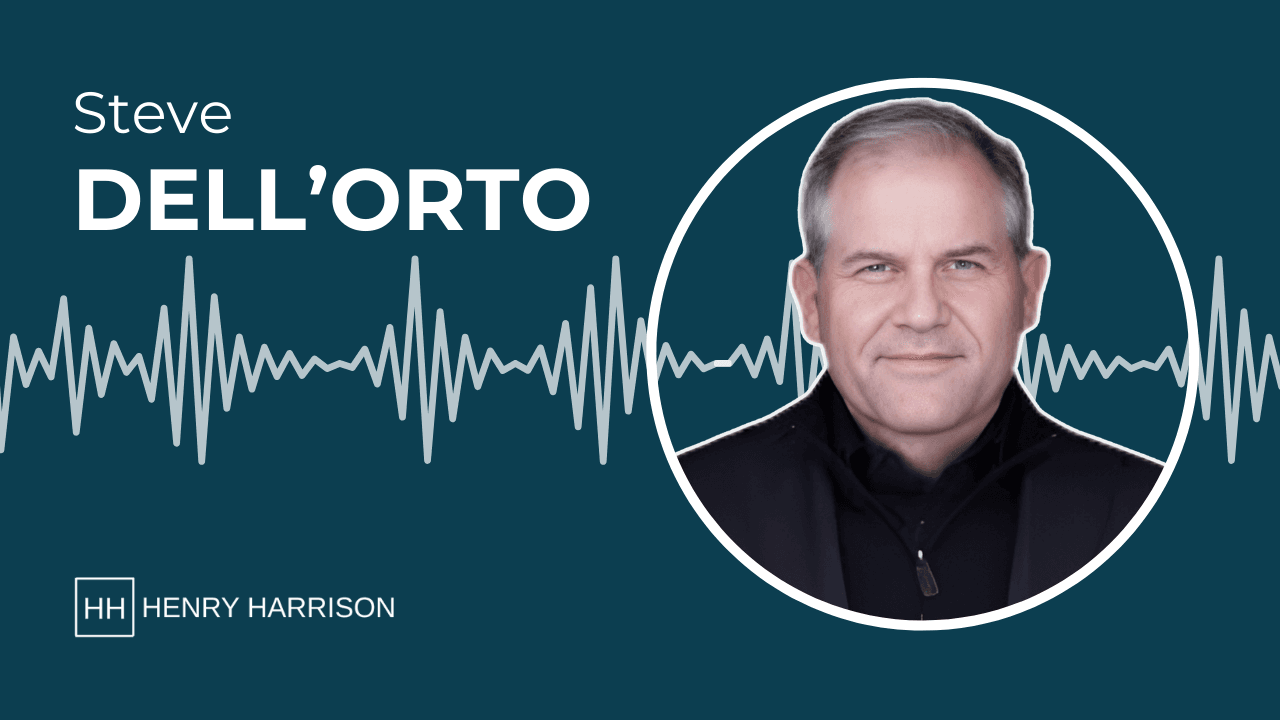
Steve Dell'Orto on Henry Harrison Podcast

Watch / Listen

Listen on SoundCloud

About This Episode

Steve Dell’Orto, the visionary founder of ConCntric ®, has over 26 years of experience in construction management. His career includes leading major projects like the Golden State Warriors arena, Salesforce Tower, and the Seattle Convention Center expansion. Steve's deep industry knowledge and passion for innovation led him to create ConCntric ®, a platform designed to streamline project planning and execution. In addition to his entrepreneurial ventures, Steve is a venture partner in construction tech-focused funds and an advisor to multiple startups, continually pushing the industry towards modernization.

Episode Transcript

This transcript has been edited for better readability: Henry Harrison Podcast — Entrepreneurs, Business & Finance Guest: Steve Dell’Orto Company: ConCntric Henry Harrison Hello, welcome to the show. Today we have Steve Dell’Orto on the Entrepreneurs, Business and Finance podcast. Hello, Steve. Steve Dell’Orto Hello, Henry. Thanks for having me on today. Henry Harrison You bet. Your business, as we can see in the background, is ConCntric. I like the logo and the creative way you came up with the name. I’m very interested in your business because we have a lot of people who are interested in construction, and we also have people working in related parts of the construction world who might be able to refer you or want to understand what’s happening in the industry. Construction, like the rest of the world, is changing very rapidly with new technology entering the marketplace. We had another guest on the podcast who was talking about all the new options being made available to his company by businesses like yours. You’re located a little north of San Francisco, in the Marin County area, just on the north side of the Golden Gate Bridge, but your marketplace really has no limits. Right now you’re focused on the U.S., which is certainly a big enough market, but international sounds like it may be coming too. Steve Dell’Orto Yes. The world is our oyster, as they say. International is definitely part of the long-term vision. Henry Harrison Why don’t you talk a little about your background first, and then we’ll talk about how you decided to start this company? You had a tremendous career at the highest levels with some of the largest general contractors and construction companies in the country, so you must have had some insight that others didn’t have in order to step out and build this business. Steve Dell’Orto I think that’s pretty accurate. I spent 26 years actively in construction management, specifically in the non-residential space — airports, hospitals, multifamily apartment buildings, convention centers, museums, large mixed-use developments, and things of that nature. Over those 26 years, I was able to grow my career and really refine not only how to manage projects, but how to build and grow a business within construction. That experience was invaluable because I learned the business from the inside out. Then, at some point, I had the opportunity to take all of that knowledge — the intimate understanding of the pain points, the inefficiencies, the frustrations, and the patterns — and actually do something about it at an industry scale. That has been thrilling. Henry Harrison Just to give people an idea of the scope of your work, I’m looking at your bio here. You’ve been involved with projects like: the Golden State Warriors Arena development Salesforce Tower Facebook’s San Francisco Tower the Seattle Convention Center expansion the Manchester Grand Hyatt the Los Angeles County Museum of Art expansion …and on and on. These are not simple projects. We’re not talking about a house remodel — and even a house remodel can be stressful enough. These are massive and complicated developments. So part of what you bring is a perspective that comes from working on some of the biggest, most complicated jobs out there. How long does it take to build one of those projects, and what kind of lead-up goes into them before any dirt gets moved? Steve Dell’Orto On average, those projects take anywhere from 20 months to 3 years to actually build. But what I saw over the course of my career — especially in the last 10 to 15 years — is that the planning stage, or what I call the gestation period, before you ever break ground, is often as long as, and in some cases even longer than, the physical construction itself. And your analogy to remodeling a house is actually a very good one. Anyone who has remodeled a house knows what that feels like. You pull your hair out. You don’t really know where the budget is going to end up. You have design changes, cost changes, timeline changes, and even with the best-intentioned people involved, it can still be a very frustrating experience. Now take that and multiply it by a hundred or a thousand. That’s what large commercial construction feels like. Yes, on these major projects we have 3D modeling, more advanced design software, and a lot of technical complexity that doesn’t exist in a home remodel, but in terms of planning, financial certainty, scope control, and decision-making, the struggle is very similar. The biggest difference is that the stakes are much higher. So what I saw over and over again was that owners, designers, and contractors were trying to do their best, but they were doing it with one or two hands tied behind their backs. They were moving fast, operating on thin margins, under immense pressure, and doing it without having the kind of unified data or technology that should exist in the 21st century. It’s actually pretty baffling how antiquated the industry has been allowed to become. And that’s what we’re here to change. Henry Harrison You’re actively changing it beyond just your own company. You’ve also been an investor and venture partner in construction-tech-focused funds, and I really admire that. My first job was in homebuilding, and I remember how resistant people could be to change. The mindset was often, “We’ve always done it this way,” or, “We know this works.” But that’s inconsistent with what the rest of the world has done. Construction has lagged behind, and you’re clearly committed to helping it catch up. Steve Dell’Orto Yes, and I’ve been fortunate in that when I stepped away from the traditional general contracting role, people recognized the value of having a company and a solution built by someone who had actually spent decades living the problem. Our customers value the fact that ConCntric is being built by someone who has walked in their shoes, as opposed to someone from outside the construction industry trying to solve a problem they don’t deeply understand. The same thing happened with the venture funds I’m involved in. They saw that I could help bring industry experience into the innovation side of the equation. That’s been a lot of fun. And then there are also the startups I advise. I work with about eight startups at various stages of their journeys. For me, that’s a way of paying it forward. A lot of people — friends and strangers alike — went way out of their way to help me when I was trying to figure out how to launch a software company. So I feel both a responsibility and a desire to do that for others. Henry Harrison Was there a specific trigger point that pushed you into entrepreneurship? Sometimes business schools talk about a “precipitating event,” and sometimes it’s not one single event at all. Sometimes it’s more of a gradual evolution. Did you have a specific moment, or was this more of a long build in your thinking? Steve Dell’Orto It was more of a slow boil. It wasn’t one moment where something snapped. In my prior role, I had grown part of an organization to over $2 billion a year, and that meant there were dozens of active projects and even more in the planning stages. The pattern I kept seeing — and it was becoming more intense — was that projects were getting more complicated, timelines were getting more compressed, and the people being asked to manage them were often younger and less experienced. At the same time, we still had no real, unified data at our fingertips. So what happened was that to make projects successful, people were just throwing the best talent they could find at the problem and hoping for the best. And when you’re talking about a $1.4 trillion industry in the U.S. and something like $10 to $14 trillion globally, that is just an insane way to operate. I got tired of being on airplanes, flying around, and fighting what felt like one wildfire after another. And the frustrating part was that I knew these issues weren’t random. They were showing up early — very early — in the planning phase. The people involved just didn’t realize it yet. So I came to believe that if we could set the table properly from the beginning, many of the downstream issues could be prevented before they ever happened. That meant capturing the data, structuring it, digitizing the workflow, and getting away from the dozens of spreadsheets and ad hoc workarounds people were using to plan projects. Once I realized that, I also realized nobody else was coming in to solve this problem at the level I thought it needed to be solved. And I knew I could. So I said, “It’s time to put my money where my mouth is,” and I stepped out to build ConCntric. Henry Harrison That’s a terrific way to put it. And I know people in construction will understand this, but for those outside the industry, imagine trying to build a billion-dollar project. You don’t just wake up and start clearing land. Everything has to be planned, permitted, budgeted, coordinated, and sequenced. And a huge part of success is all of that pre-planning. That’s really what your company focuses on, because if the plan is well thought out and aligned, the project is going to go a whole lot better. Maybe explain that in layman’s terms first, and then in construction terms. Steve Dell’Orto Sure. The interesting thing is that the size of the project doesn’t really change the nature of the planning. Whether it’s a $5 million project or a $1 billion project, there’s a tremendous amount of commonality in what has to happen before work begins. So again, go back to the analogy of remodeling a house. You need an architect. You need to understand what you want. You need to explore design options. You need to balance those choices against your budget. And ideally you need good open dialogue between the owner, architect, and contractor so that decisions can be made early — before things have to be redone. If you don’t do that well, then you get into a cycle of discovering late that the design is too expensive, or something was missed, or the sequence doesn’t work, and now you have to rip things apart and start over. In construction, time is money, and you can barely afford the time and money to do it right the first time. You definitely do not have the time or money to do it twice. So what we do is create a single collaborative environment where owners, designers, and builders can all come together. Inside that environment, there are workflows and tools that help them do the planning work they need to do — schedule planning, logistics planning, estimating, value engineering, cost reduction studies, and many other tasks. The key is that all of these tools are in one place and they complement each other. They are not mutually exclusive efforts. When data can flow from one planning activity to the next, you can use old project data to inform the current project, and then use current data to make better predictions about the future. You can’t do that with isolated spreadsheets, disconnected apps, and point solutions tied together with band-aids and bailing wire. You need a more sophisticated digital backbone. That’s what ConCntric provides. Henry Harrison That’s really helpful. And I guess you’re right — the steps for a $5 million building and a much larger one are similar in concept. The people responsible for that smaller building still need many of the same kinds of clarity and control that the huge project team does. And your product can help with both. How do clients get started with you? Let’s say they hear about this on the podcast, or from a referral, or from someone in their network. What happens next? Steve Dell’Orto They reach out, usually through our website at ConCntric.com, and then we introduce them to the platform. Now, while the platform is powerful and includes about 13 different solutions at this point, it is also very intuitive — and that was completely intentional. One of the biggest mistakes I saw in construction technology over the last couple of decades was that software often created more work instead of less. People would have to sit through long training sessions, go through manuals, click through endless steps, and by the end of it, the technology was actually making the job harder than doing it the old-fashioned way. That doesn’t work. Technology should remove load from people. It should eliminate the mundane and free up human beings to do what people do best — build relationships, solve problems, make decisions, and create. So we designed ConCntric to be easy to use right out of the box. I still remember being amazed when my daughter, who was maybe 18 months old at the time, picked up an iPad and within two minutes was swiping through photos and moving things around intuitively. That was the model. No manuals. No giant onboarding burden. No making people suffer through technology. So the process with us is pretty straightforward. In some cases, we’ve gotten customers up and running after just a couple of one-hour sessions. We meet them where they are, move at the pace they need, and help them get started. It’s still a commitment, of course, on both sides. But it’s not overwhelming, and once they’re in, they see the value very quickly. We can also help bring in historical data so the current project benefits from prior knowledge. Henry Harrison That is really good to hear, because I think most people’s first reaction is, “Oh no, not one more thing to learn.” But if it’s intuitive, easy to use, and quickly removes friction from work people are already doing, then of course they should go down that path. And I can’t think of anything more important than making it easy to get started. Steve Dell’Orto Exactly. And simple is hard. It takes a lot of discipline to make something powerful feel easy, and I give a lot of credit to my team for that. They challenge every decision we make and constantly strip out unnecessary complexity so people can focus on the work that matters. We’ve gotten a lot of compliments on how intuitive the platform is, how easy the information is to consume, and how quickly people can understand where the project is today, where it has been, and where it’s headed next. That matters because in construction, you’ve got many different people with very different backgrounds trying to make decisions quickly. The information needs to be understandable, accessible, and actionable. Henry Harrison It also sounds like your customers are going to have happier employees, less stress, more satisfied clients, and higher profitability. Even just on something like change orders, if they could reduce disputes and confusion there, the platform would probably pay for itself. Change orders are one of those things that so easily create misunderstandings or even fights, because something wasn’t tracked properly, communicated properly, or caught early enough. And no contractor wants that. Steve Dell’Orto Exactly. There is a direct relationship between the quality of planning at the front end of a project and the number of change orders, disputes, and relationship problems later on. If you do little or no planning, or if you do it in a fragmented way, then the drawings and documents people are working from are going to have errors, omissions, and gaps. That’s where change orders come from. So the best way to affect trust, transparency, and relationships on a project is to solve the issue at the root cause. And the root cause is: plan better, plan deeper, and you’ll find those issues virtually before they ever happen in the field. Once the issue shows up in construction, that’s the most expensive time to solve it. People are standing around, work gets interrupted, things have to be retrofitted, and sometimes the quality of the asset is compromised. The more you do up front, the more it pays dividends later. Henry Harrison That seems like a really good place to wrap up. Unless there’s anything else you’d like to add, I’ll just say that it’s really neat hearing how long you’ve been thinking about this. The story about your daughter using the iPad reminds me that this has been in your mind for a long time. You’ve been frustrated by the problem, thinking about it, wanting to improve it, and now you’re doing something about it. Steve Dell’Orto Yes, absolutely. And that’s really the nature of this industry. It can be a frustrating business, even when you love it. There are a lot of moving parts, a lot of pressure, and a lot of risk. So for me, it’s been a great opportunity to step out and solve a pain point that I understand deeply. And I do take it as a real responsibility. I want to do this for the industry — for general contractors, architects, owners, and everyone else involved. I don’t think this is a problem that somebody from outside the industry can solve nearly as well as someone who has actually lived it. There are a number of other founders I know who are doing something similar in different parts of construction tech — stepping out from industry roles to solve specific problems — and we have this informal network of what we call “built by builders.” That means something. And when our customers think about it, they recognize the value in that. They understand that someone who has lived the work is more likely to build something they can trust and actually use. So yes, I think we’re on to something very important, and we’re giving it hell every day. Henry Harrison Terrific. Congratulations, and thank you for coming on the podcast today. Steve Dell’Orto, ConCntric, on Entrepreneurs, Business and Finance. We’ll talk to you soon. Steve Dell’Orto Appreciate it, Henry. Thank you for having me today. Henry Harrison Thank you so much.

Connect with Steve Dell'Orto

Enjoyed This Episode?

Subscribe to the podcast and never miss an episode. Available on all major platforms.